
 See Our Latest Article on HelloNation
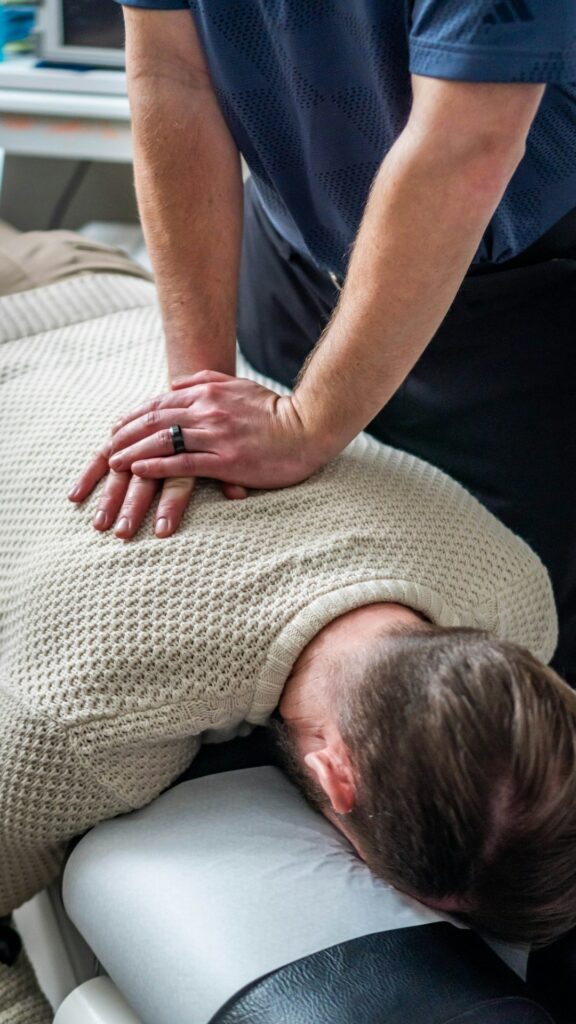
Athletes in Canandaigua, NY often use chiropractic care as one part of a broader approach to managing training demands, recurring aches, and movement limitations. Chiropractic adjustments may help some people move more comfortably, especially when joint stiffness or mechanical back pain affects normal activity. They are not a substitute for medical evaluation, strength training, rehabilitation, sleep, or appropriate treatment of a significant injury.
What is a chiropractic adjustment?
A chiropractic adjustment is a hands-on technique intended to apply a controlled force to a joint, usually in the spine or an extremity. The goal may be to improve joint motion, reduce discomfort, or make movement feel less restricted.
Adjustments can be delivered in different ways. Some involve a brief, low-amplitude thrust, while others use slower mobilization, positioning, or an instrument. The appropriate method depends on the athlete’s symptoms, health history, physical findings, and goals.
The term “adjustment” does not mean that a bone has been permanently moved back into place. In many cases, the short-term effects are related to changes in joint motion, muscle activity, pain sensitivity, and confidence with movement.
Can adjustments improve athletic performance?
They may improve certain movement-related factors, but claims about major performance gains are not well established. Research has found that spinal manipulation can produce short-term changes in range of motion, muscle function, or perceived comfort in some people. Those findings do not prove that adjustments make an athlete faster, stronger, or less likely to be injured over an entire season.
For example, a runner with restricted hip or lower-back movement may feel more comfortable after treatment and then perform mobility or strengthening exercises more effectively. A recreational hockey player with stiffness after repeated skating may notice easier rotation. These are functional possibilities, not guaranteed outcomes.
Performance still depends primarily on:
- Sport-specific practice
- Progressive strength and conditioning
- Adequate recovery and sleep
- Nutrition and hydration
- Skill technique
- Training volume and workload management
- Treatment of underlying injuries
An adjustment should be viewed as a possible aid to movement, not as a performance shortcut.
What benefits might athletes notice?
The most realistic benefits are usually related to comfort and function rather than dramatic changes in athletic ability.
Temporary pain relief
Spinal manipulation may provide modest short-term relief for some types of mechanical low-back pain. This can be useful when pain makes walking, lifting, bending, or sport-specific movement more difficult.
Pain relief varies significantly. It may last hours, days, or longer, and it may not occur at all. The cause of pain matters. Muscle strain, stress injury, nerve irritation, joint irritation, and referred pain require different approaches.
Improved range of motion
Joint stiffness can affect the way an athlete squats, rotates, reaches, runs, or changes direction. An adjustment may temporarily improve movement in a restricted area, particularly when it is combined with active mobility work.
The lasting improvement generally depends on addressing the reason the restriction developed. Weakness, poor technique, excessive training load, limited recovery, or inadequate flexibility may continue to cause problems if they are not addressed.
Better tolerance for rehabilitation exercises
Some athletes find it easier to participate in exercise-based rehabilitation after symptoms are reduced. For example, a person with back discomfort may be able to perform controlled hip-strengthening or trunk-stability exercises with less guarding.
This does not mean the adjustment healed the injury by itself. It may simply make active rehabilitation more tolerable. Strength and coordination work remain central to returning safely to sport.
Support during periods of changing activity
Seasonal changes can affect training habits in the local community. Outdoor running, cycling, paddling, and field sports may increase during warmer months, while indoor training, skiing, snow removal, and other winter activities can place different demands on the back, shoulders, and hips.
A sudden increase in activity is often more relevant than the activity itself. Athletes who go from limited winter exercise to several intense sessions per week may develop soreness because tissues have not had time to adapt.
Can chiropractic adjustments prevent sports injuries?
Evidence is not strong enough to say that routine adjustments prevent injuries. An athlete may feel looser after treatment, but that does not guarantee protection from a sprain, fracture, tendon injury, concussion, or overuse condition.
Injury prevention is more reliably supported by:
- Gradual increases in training volume and intensity
- Warm-ups that reflect the demands of the sport
- Strengthening vulnerable areas
- Good landing, lifting, and change-of-direction technique
- Appropriate footwear and equipment
- Rest between hard sessions
- Early attention to persistent pain

Regular chiropractic care should not be used to justify training through pain or ignoring changes in coordination, strength, balance, or endurance.
When should an athlete avoid an adjustment or seek medical evaluation first?
An athlete should receive a careful assessment before manipulation when symptoms are unusual, severe, worsening, or associated with a possible serious injury. Urgent medical evaluation may be needed for:
- Loss of strength or sensation
- Numbness that is spreading
- Loss of balance or coordination
- Severe pain after a collision or fall
- Inability to bear weight
- New bowel or bladder problems
- Fever, unexplained weight loss, or significant illness
- Severe headache, dizziness, fainting, or vision changes after a neck injury
- Suspected fracture, dislocation, concussion, or spinal cord injury
Neck manipulation deserves particular caution. Rare but serious vascular or neurological complications have been reported, and the risks may be higher for people with certain medical conditions. A complete health history should include recent injuries, blood-clotting problems, connective-tissue disorders, medications, and neurological symptoms.
Mild soreness, stiffness, fatigue, or a temporary increase in discomfort can occur after manipulation. These effects commonly resolve within a day. Symptoms that are severe, unusual, or persistent should not be dismissed as a normal response.
How should adjustments fit into an athlete’s care plan?
The most useful approach is usually integrated rather than adjustment-only. A plan may include an examination, movement assessment, education, progressive exercise, recovery guidance, and coordination with other qualified health professionals when needed.
Athletes should be able to explain:
- What problem the treatment is intended to address
- What improvement should be expected
- How many visits or sessions may be reasonable to reassess progress
- Which exercises or activity modifications support recovery
- What symptoms should prompt further evaluation
If pain repeatedly returns after treatment, the underlying training error, tissue injury, technique issue, or recovery problem may need closer attention.
For residents participating in demanding seasonal activities, the practical question is not whether adjustments are universally good or bad. The better question is whether a specific adjustment is appropriate for a clearly assessed problem, whether it improves meaningful function, and whether it is being used alongside proven strategies for strength, rehabilitation, and injury prevention.
